
Together is Better: The Power of Co-Regulation
But First, Some Back Story
My History with Group Work (and Why I Was Skeptical)
If you told me a few years ago that my deepest transformation would happen in a group setting, I would have laughed. Honestly, my past experiences with groups had been less than transformative. Between navigating middle school girl cliques, shouldering the weight of disastrous college group projects, and work friends where all you ever talked about was the collective trauma experiences with your bosses, the underlying lesson seemed to be: people will use you for your brain power, trust is risky, and I’m better off on my own (cue dramatic music, IYKYK). When I first walked into a somatic group class, I showed up a little skeptical, very shy, and completely unprepared for how much this work would change my life.
The Moment the Muck Shifted
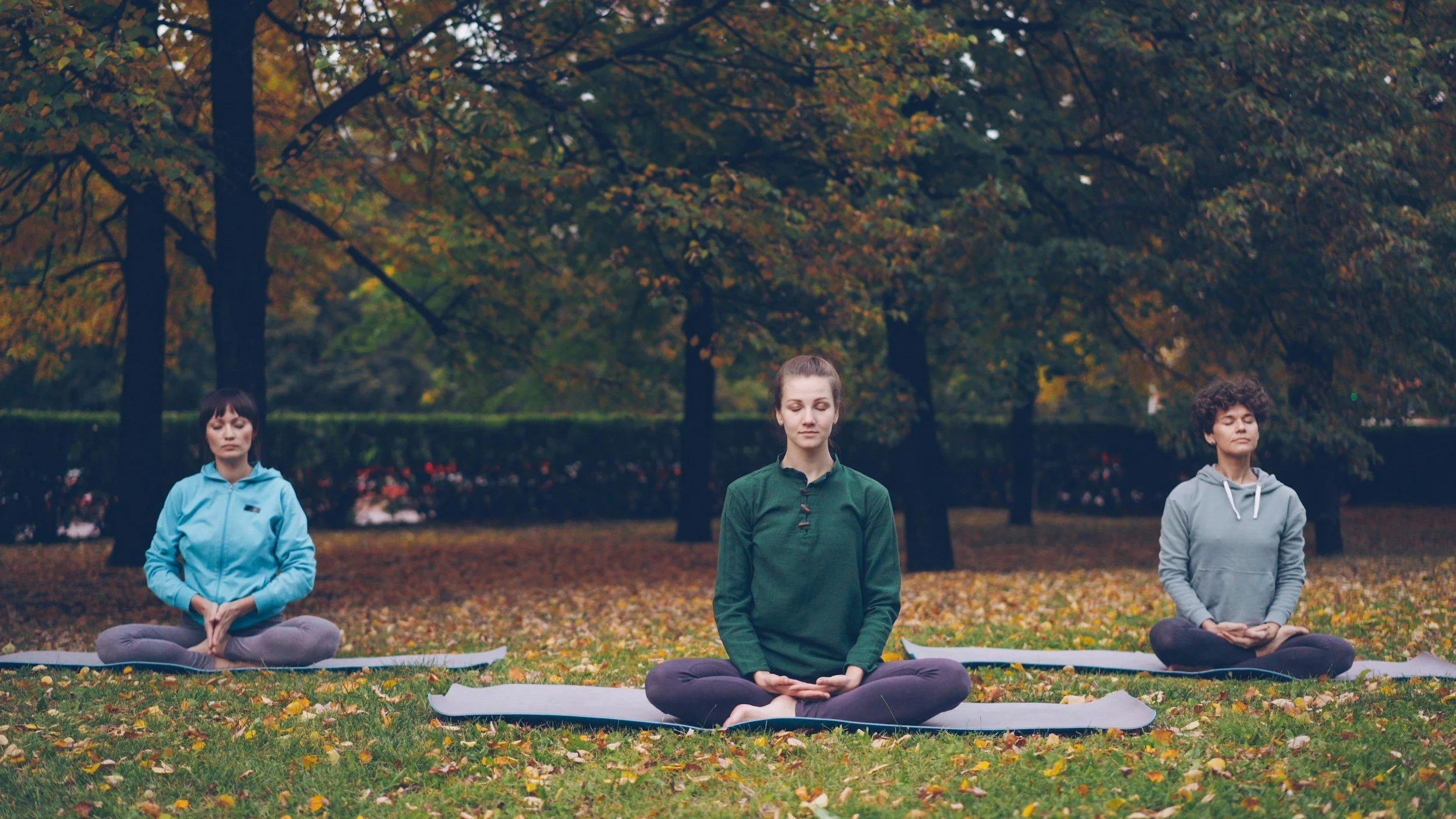
That first class was a true turning point. After breathing, shaking, and moving on my mat, I felt freer than I had in years. My creativity was flowing so powerfully that I wrote an entire poem during the integration portion of the session. Then, as we began the sharing circle, fear gripped me. But driven by a feeling I couldn't name, I managed to read it out loud, face looking directly at the page, not at anyone else, tears streaming down.
In that moment, something broke. I realized the safety of the container, and the palpable support from the room, was stronger than my need to hide.
The Science of Safety: What Is Co-Regulation?
What I experienced in that room wasn't just emotional support; it was co-regulation.
Co-regulation is the process by which two or more nervous systems interact to achieve a state of calm.
In Childhood: As infants, we are entirely dependent on caregivers to co-regulate us. When a baby cries, a calm caregiver provides a steady presence, helping the baby's developing nervous system return to balance. If this essential co-regulation is inconsistent or absent, we grow up lacking the internal skills to self-soothe or trust external support. This often locks us into those "survival mode" patterns you know so well.
The Good Muck Difference: In our group classes, you are held in a resourced container of other people who are actively practicing presence. You are learning that vulnerability is not a threat. By simply being present with others in a regulated space, your nervous system begins to learn, physiologically, that it is safe to relax, be seen, and access deep rest.
Finding Your Voice in the Crowd
My consistent commitment—I attended nearly every Sunday class for a year and a half—proved to be the key to dramatic and lasting change.
The group became my laboratory. I began to share with confidence, safe in the knowledge that I would be supported and held. More importantly, I realized that by sharing my honest truth, I wasn't just helping myself; I was helping others find their own voice or simply know they weren't the only person who thought those same "mucky" thoughts.
The Good Muck group classes are a place to practice:
Co-Regulation: Building a support system that mirrors safety back to your nervous system.
Agency: Practicing using your voice and clearly speaking your needs without fear of judgment.
Building Capacity: Learning that you can meet discomfort with others nearby, increasing your resilience for the outside world.
You deserve a space where showing up as your messy, honest self is the greatest contribution you can make.
Ready to Trade Isolation for True Inner Safety?
The journey to an unshakable nervous system doesn't have to be lonely. We invite you to experience the life-changing power of co-regulation within our container.
Until the next time we meet in the muck,
Caitlin
P.S. Take a courageous step toward finding your community. Use code TOGETHER20 at checkout for 20% off your next group class. We can't wait to see you there.
